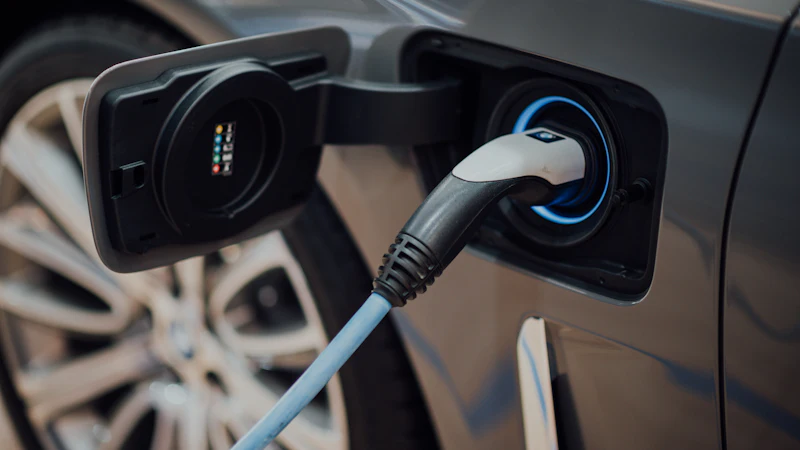
Ford Escape, Corsair. Published by Transport Canada as 2024781 on 20 December 2024. System: High Voltage.
What the notice says Issue:
On certain vehicles, a problem inside the high-voltage battery could cause a short circuit. If this happens, there could be a loss of power to the wheels and/or the high-voltage battery could overheat.
Note: This recall only affects certain plug-in hybrid vehicles (PHEV) equipped with a 2.5 L engine.
…
Is your vehicle included? Check with your VIN at Transport Canada, or ask a dealer. This page is an independent copy of the notice, kept so you can see what changed after it was published. It is not the authority, and the authority’s own text is the one to act on.
Transport Canada carries this recall as 2024781, dated 20 December 2024. The American register carries the same defect as campaign 24V954, dated 20 December 2024. They are the same defect because the manufacturer filed both under one internal campaign code, 24S79.
| Canada | United States | |
|---|---|---|
| Number | 2024781 | 24V954 |
| Dated | 20 December 2024 | 20 December 2024 |
| Register | Transport Canada | NHTSA |
| Make | Ford | |
Both registers carry the same date for this defect.
These are the dates each register records against its own notice. They are separate administrative acts in two countries, recorded by two authorities under two sets of rules, and this page does not claim that one caused the other or that owners in either country were contacted on those days. What it shows is that the same manufacturer campaign reached the two registers on different dates.
This campaign code also appears in a third register. The European alerts covers the European Union side.
Read the American notice 24V954, including every earlier version of its wording this site holds. The Canadian register explains why the manufacturer code is published there and what that makes possible. Canada and America sets every matched pair side by side.
Ford ESCAPE in the other registers
This site holds seven national and European registers. Ford ESCAPE is named on 72 American notices and 11 Israeli. Those are separate campaigns, filed with separate authorities on their own schedules.
The American register
The Israeli register
Nothing here says any of these is this notice in another country. A model recalled in one country is often recalled in another, in different words and at a different time, and the authorities do not cross-reference each other. Reading them together is the reason this site holds more than one register.
What Transport Canada published
- Recall number
- 2024781
- Recall date
- 20 December 2024
- Make
- Ford, Lincoln
- Models
- Escape, Corsair
- Model years
- 2020 to 2024
- Vehicle class
- SUV
- System
- High Voltage
- Raised as
- Safety MFR
- Vehicles affected
- 8,825
- Register
- Canada — Transport Canada, Vehicle Recalls Database
Issue:
On certain vehicles, a problem inside the high-voltage battery could cause a short circuit. If this happens, there could be a loss of power to the wheels and/or the high-voltage battery could overheat.
Note: This recall only affects certain plug-in hybrid vehicles (PHEV) equipped with a 2.5 L engine.Safety Risk:
A loss of power to the wheels could increase the risk of a crash. A battery that overheats can create a fire risk, even while the vehicle is parked and turned off.Corrective Actions:
To reduce the safety risk, Ford advises not to charge your vehicle until the recall repairs have been completed. Ford will notify owners by mail and advise you to take your vehicle to a dealership to update the battery energy control module (BECM) software. The software will monitor the high-voltage battery and warn you if it detects a problem. If you see this warning, you should contact a dealership to arrange replacement of the high-voltage battery pack.
The wording above is the department's own, as it stood in the monthly file this site last read. Vehicle counts are the sum of the counts published for each make and model the recall covers. To act on a recall, use the official notice: Transport Canada recall 2024781.
Ford elsewhere in this register
Ford is named on 818 notices in the copy of Transport Canada’s register held here, of which these are the nearest to this one in time.
- 2024777 · 20 December 2024 · Flex, MKT · Visual System
- 2024778 · 20 December 2024 · F-150 · Suspension
- 2024780 · 20 December 2024 · F-350 Super Duty, F-450 Super Duty, F-550 Super Duty · Fuel System
- 2024714 · 22 November 2024 · Maverick · Visual System
- 2024689 · 8 November 2024 · Escape · Airbag
- 2024687 · 8 November 2024 · Expedition, Police Interceptor Truck (f-150), F-150 · Engine
- 2024688 · 8 November 2024 · Ranger · Fuel System
- 2024644 · 25 October 2024 · Explorer · Visual System
The same system: High Voltage
133 notices in this register name High Voltage. A defect that keeps returning under one heading is worth reading as a group rather than one notice at a time.
- 2024723 · 27 November 2024 · Q5, A7 · High Voltage
- 2024700 · 18 November 2024 · Ev6 · High Voltage
- 2024701 · 18 November 2024 · Ioniq 5, G80, Ioniq 6 · High Voltage
- 2024673 · 5 November 2024 · Air · High Voltage
- 2024656 · 1 November 2024 · Cx-90, Cx-70 · High Voltage
- 2024658 · 31 October 2024 · Cx-90 · High Voltage
Reading this against the source
This page is what Transport Canada published in the Vehicle Recalls Database, kept as it was read. The authority publishes only its current wording; if a notice is rewritten, the earlier version disappears there and is kept here. The whole register is at /canada, and how the reading is done is set out in the method.
What the words on this notice mean — the system it is filed under, and what the filing type says about who found the fault.
This notice names one vehicle among several registers that have written about it. Every notice this site holds for the Ford Escape, in all seven, is kept on that vehicle's own page, with the newest in each.
This register keeps an index of its own for every maker and every year it holds: Canadian recalls on a Ford: 1,346 in the register, and 672 Canadian vehicle recalls filed in 2024.
Put this notice on your site
A small badge that links here and names the register's reference. It costs one line of HTML and needs no key.
The badge is free to use. It links to this page and nowhere else, and it never shows advertising.
Owners of these cars
No register publishes what happens after the letter. Owners do: tell us, in two taps.
Anonymous: no account, no cookie, nothing you type is stored beyond these choices. Figures appear once 3 owners have answered, and are published with the record under CC BY 4.0.